Our Location
304 North Cardinal St.
Dorchester Center, MA 02124
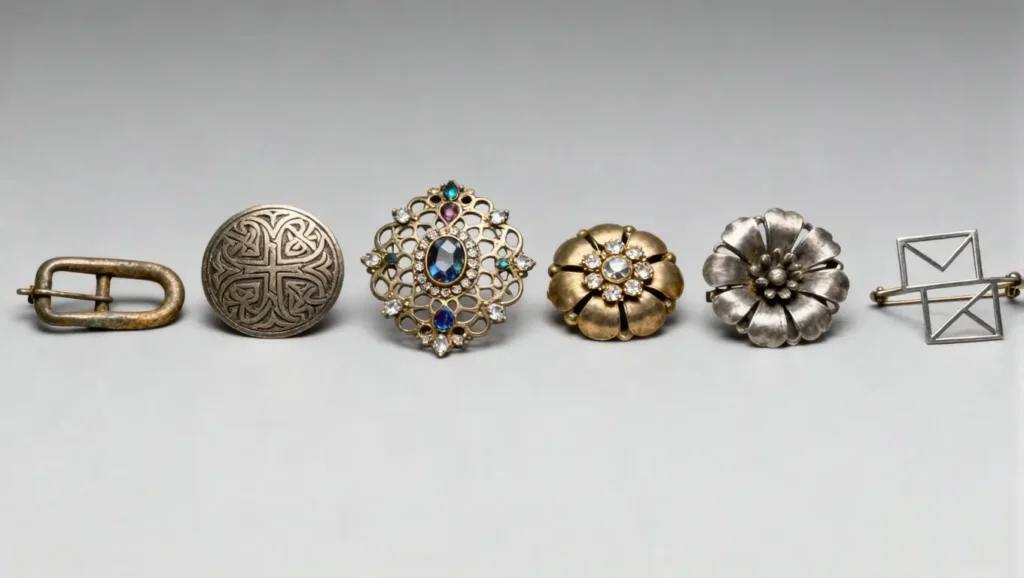
Brooches have existed for thousands of years, evolving from simple utilitarian fasteners into symbols of identity, artistic expression, social status, and personal aesthetics. While contemporary fashion often celebrates necklaces, rings, and earrings, brooches carry a deeper narrative—one shaped by craftsmanship, culture, and the passage of time. This guide explores brooch history, structure, design language, and modern relevance through clear explanations designed for readers who may be encountering brooch culture for the first time.
The earliest brooches were not accessories but tools. Ancient cultures needed a way to secure cloaks, woven garments, or layered fabrics, and metal offered a durable solution. These primitive fastening devices gradually evolved into more intentional shapes as artisans discovered new metalworking techniques. Over centuries, functional forms were replaced or embellished by decorative patterns, religious symbols, and representations of nature.
What makes brooch evolution remarkable is its cultural diversity: Mediterranean civilizations favored spirals and fibula shapes, Northern Europeans embraced protective motifs, and Asian regions integrated storytelling into metal art. Each transformation reflected societal needs—warmth, identity, hierarchy, or ritual symbolism.
Throughout history, brooches served roles far beyond aesthetics. Certain tribes viewed them as status badges; royal families commissioned jewelled designs for ceremonies; warriors wore brooches as protective symbols; and Victorian society used memorial brooches to preserve emotional connections with loved ones. These cultural layers give brooches a depth that modern fashion accessories rarely possess today.
In some regions, brooches became gender-neutral items, exchanged as tokens of respect. In others, they functioned as protective charms believed to ward off misfortune. Even today, many traditional garments still incorporate brooch-like fasteners, proving how deeply rooted the form is in human expression.
Design trends in brooch history reflect broader changes in society. As trade routes expanded, artisans gained access to gemstones and precious materials. When industrialization arrived, new production methods allowed for more complex forms and wider distribution.
Victorian brooches emphasized symbolism—flowers representing virtues, knots symbolizing eternal love, and cameos portraying important figures. Mid-century designs leaned toward optimism and organic curves as the world moved into a period of cultural renewal. Modern aesthetics prioritize minimalism, geometry, and versatility, allowing brooches to complement both formal and casual clothing.
A brooch’s beauty is not only visual—it lies in how the piece is constructed. Traditional brooch crafting involves shaping the base metal, creating structural stability, and ensuring the pin mechanism aligns smoothly and securely. Skilled artisans consider tension, balance, weight distribution, and durability.
Gemstone settings, enamel work, filigree carving, and metal forging all contribute to a brooch’s uniqueness. Contemporary designers also incorporate unconventional materials like resin, glass, sustainable metals, and handcrafted textures. Understanding these elements helps collectors and enthusiasts appreciate both antique and modern designs.
Though brooches experienced a temporary decline in mainstream fashion, their resurgence is undeniable. They offer individuality at a time when many accessories are mass-produced. A brooch can transform a simple coat, blazer, or dress into a curated personal statement. It can symbolize a mood, represent heritage, or simply add architectural elegance to an outfit.
Modern influencers, stylists, and designers increasingly feature brooches in runway shows, editorial shoots, and personal collections. Their versatility—clipped on bags, hats, scarves, collars, or even shoes—opens new possibilities for self-expression.
Anyone new to brooches should start by observing shape, texture, material, and fastening mechanisms. Antique pieces may show patina, wear marks, or hand-crafted irregularities that reflect their age and authenticity. Meanwhile, modern brooches offer smoother finishes and simplified geometry, appealing to minimalists and fashion-forward individuals.
The joy of brooch collecting lies in discovering stories—who made them, when they were worn, and what cultural elements shaped their design. Whether you prefer historical richness or modern elegance, brooches remain one of the most diverse and expressive forms of wearable art.